

As part of the Helmholtz Metadata Collaboration (HMC) platform, SCC's Data Exploitation Methods (DEM) department develops services that support researchers in handling their data. The aim is to record and describe research data in such a way that it is easy to find, accessible and reusable - in line with the FAIR principles (Findable, Accessible, Interoperable, Reusable).
A common problem in everyday research is that data and associated information are distributed in many different systems. These include, for example, data repositories for publications, databases for individual research resources such as samples, devices or chemical compounds, as well as platforms for software or complex workflows. This fragmentation makes it difficult to maintain an overview and reuse data efficiently.
One possible solution is Research Object Crate (RO-Crate). This involves organizing research data together with descriptive metadata as a self-contained, self-describing package. This makes it easier to understand and pass on content and contexts. In practice, however, the creation of such packages is technically challenging.
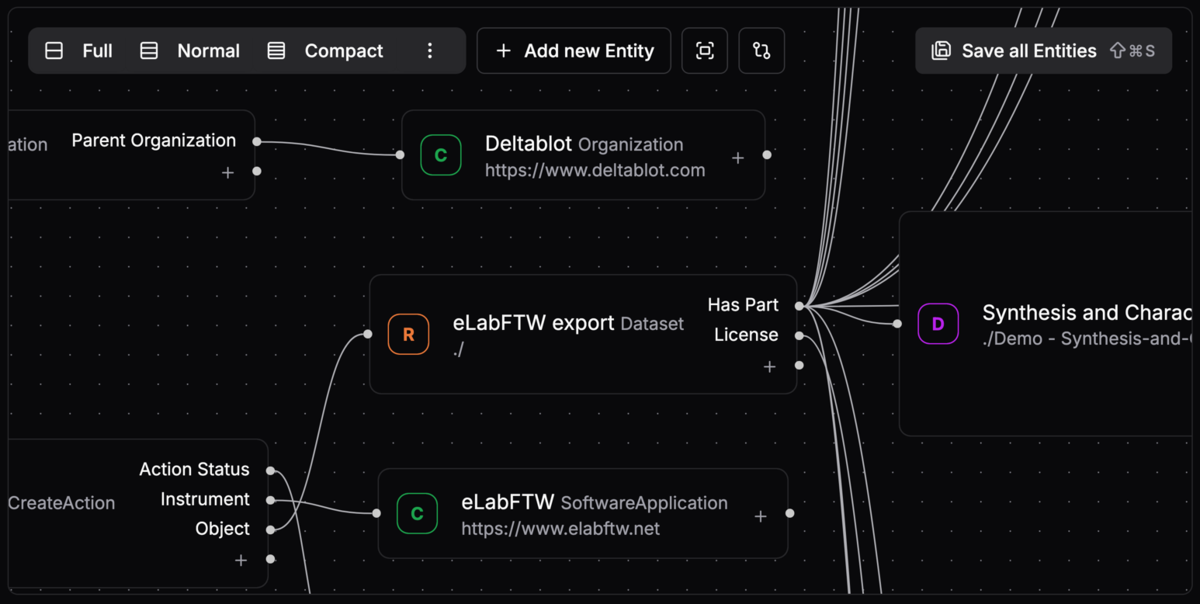
This is where NovaCrate comes in: a web-based tool developed specifically for science. It enables research data to be compiled step by step in the form of RO-Crates without the need for in-depth technical knowledge. This is supported by structured input forms, visual representations of correlations and an optional text-based editor for advanced users.
NovaCrate is provided as a service in the Helmholtz Cloud in cooperation with the Helmholtz Federated IT Services (HIFIS). NovaCrate is constantly being developed through continuous user feedback. The long-term goal is to offer scientists a simple and effective way to organize and share their data "FAIR".